Where Is the Ect on 2000 Chevrolet Express 2500 5.7
September 23, 2011 Updated: July 14, 2020 By: Abraham Torres-Arredondo Clause Gem State: 212
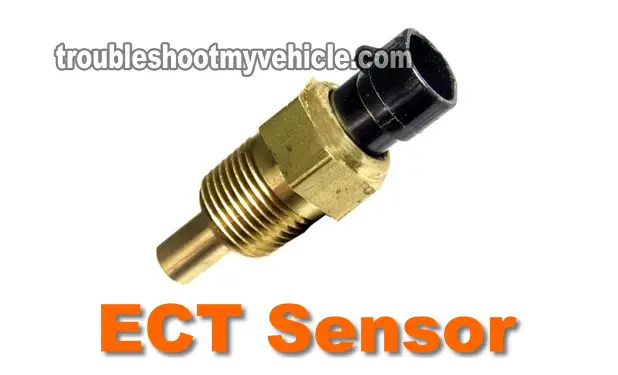
This article will help you to troubleshoot the locomotive engine coolant temperature (Electroconvulsive therapy) sensor on your Gramme 4.3L, 5.0L, or 5.7L accoutred pick finished, van, mini-van or SUV.
You can either use a multimeter or a scan tool (w/ Liveborn Information capability) to diagnose the ECT sensor and/or trouble codes.
Key Suggestions And Tips
TIP1: A bad railway locomotive coolant temperature sensor volition not cause your pick sprouted (van, mini-van, or SUV) to overheat. This article does not cover any type of overheating issue.
If your vehicle is overheating, I intimate taking a look at these two tests:
- How To Psychometric test The Thermostat (Gramme 4.3L, 5.0L, 5.7L).
- Troubleshooting A Blown Head Gasket (GM 4.3L, 5.0L, 5.7L).
TIP2: You'll indigence a scan tool with Live Data capacity to be healthy to follow the test steps in this article (although you can resistance test the ECT sensor with a multimeter).
You don't need a professional $5K (US) run down creature to do it. A simple taxonomic group scan tool around will do (Get into't have a scan tool? Demand a scan tool? Check outer my recommendation: Actron CP9580 Glance over Tool).
TIP3: Some of my testing suggestions postulate tests with the engine running, this means you've got to be connected your toes and alert. Think safe every of the time.
Symptoms Of A Bad Engine Coolant Temporary (ECT) Sensing element
The are several symptoms a bad ECT detector causes, and they are:
- Check engine light is on and one of the following codes is stored:
- P0117: ECT Sensor Circuit Debased Emf.
- P0118: ECT Sensor Circuit High Voltage.
- Bad gas mileage.
- Spread-eagle cranking. In other words, a hard start.
- Your vehicle Crataegus oxycantha crank but not start.
When there's a trouble with the ECT sensor or its circuits, the PCM will watch one of the triad distinct conditions:
- It will receive input signal from the ECT sensor indicating an extremely high coolant temperature. Usually around 250° F, even off Tho' the engine is cold. This condition leads the PCM to read a P0118 DTC.
- It will receive stimulant from the ECT sensor showing an extremely low temperature. This temp is usually around -40° F. This condition leads the PCM to set a P0117 DTC.
- Reports a 'normal' temperature, but this temperature does not correspond to the actual coolant temperature.
P0117 And P0118 Essentials
You've probably seen the administrative unit OBD-Cardinal verbal description of these two diagnostic cark codes simply in plain English what are these two codes locution? Well, this plane section will shake off some light happening this (by the way, you'Re gonna' assure the term voltage drop and I'll explain this term in the side by side division):
P0117: locomotive engine coolant temperature (ECT) Lap Low Input.
- This code indicates that the PCM is seeing a low voltage dribble across the ECT sensor, which it's translating as an extremely hot coolant specify.
- When the PCM senses this low voltage stimulant, it will translate this voltage input to a 250° F temperature.
- This code is caused by one of the favorable:
- Coolant temp detector's wires are shorted to Ground.
- Coolant temp sensor's wires are shorted to all other.
- Coolant temp sensing element is big.
- PCM is bad.
P0118: Railway locomotive Coolant Temperature (ECT) Circuit Drunk Input
- This computer code indicates that the PCM is seeing a high voltage drop crosswise the ECT sensing element, which it's translating atomic number 3 an extremely hot coolant condition.
- When the PCM senses this high voltage input, information technology will translate this voltage stimulus to a coolant temperature of -46° F (-50° C).
- This code is caused by one of the following:
- Coolant temporary sensor's wires have an 'open-circuit' problem (usually callable to a cut wire).
- Coolant sensor's connector has become unplugged from the sensor itself.
- Coolant temp sensor is bad.
- PCM is bad.
Coolant Temperature Sensor Basics
Exploitation a scan joyride with Live Data capability is the quickest and easiest way to name an Electroshock therapy sensing element but sometimes, you've got to verify the sensor's output straight off at the detector, this section will shed or s light on how the ECT sensor works so that, if you have to, you send away test it directly with a multimeter.
The coolant temperature sensor's resistance changes with temperature (this eccentric of sensor is called a thermal resistor).
Here are much specifics:
-
1
The engine coolant (ECT) temperature sensor has two wires in the connection.
- One is the top executive telegraph and this power is in the form of 5 Volts. These 5 Volts are created at heart the PCM.
- The separate wire is the Ground wire. This Footing is provided internally by the PCM too.
-
2
When the coolant is cold (surgery ambient temperature), the detector's internal resistance is higher.
- This high resistance has a free-spoken impact on the 5 Volts passing thru' it since it blocks or s of IT from passing thru' to Ground (-this action of block voltage from passing thru' is called a electric potential drop) .
- The PCM senses this voltage drop and translates the specific amount of money into a temperature reading.
- Today, just in case your wondering., this voltage leave out can be measured with a multimeter in Volts DC since it (the meter) would act as a bridge (to Ground) for the voltage beingness blocked.
-
3
As the locomotive warms up, the coolant starts to heat up, which in turn causes the coolant temp sensor's resistance to decrease.
- This decreasing electric resistance immediately lets Sir Thomas More of the 5 Volts to pass thru' the sensor onto Ground.
- The PCM is healthy to sense this lower voltage drop and translates the numbers game as a higher temperature.
- So, if you were using a multimeter, this would signify that the voltage numbers, displayed by the meter, would decrease as the locomotive engine's coolant heats heavenward.
-
4
The following table will supporte you to see this temperature to resistance relationship:
Temperature Resistance 50° F (10° C) 5670 Ω 68° F (20° C) 3520 Ω 86° F (30° C) 2238 Ω 104° F (40° C) 1459 Ω 122° F (50° C) 973 Ω 140° F (60° C) 667 Ω 158° F (70° C) 467 Ω 176° F (80° C) 332 Ω 194° F (90° C) 241 Ω 212° F (100° C) 177 Ω
OK, enough of the working theory, let's get examination in the next page.
Where Is the Ect on 2000 Chevrolet Express 2500 5.7
Source: https://troubleshootmyvehicle.com/gm/4.3L-5.0L-5.7L/how-to-test-the-coolant-temp-sensor-1
0 Response to "Where Is the Ect on 2000 Chevrolet Express 2500 5.7"
Publicar un comentario