Beyond Technique in Family Therapy Finding Your Therapeutic Voice Pdf

Nosotros all start this life with a family unit, whether that family unit is composed of blood relatives, adopted parents, a close-knit neighborhood, or a foster family.
This family unit that we acquire when nosotros are born influences every aspect of our lives, from our first moments to our last.
Our family affects who we are and who we become, for better and for worse. We acquire our vocabulary, our habits, our customs and rituals, and how to view and observe the world effectually us.
Nosotros too learn how to dearest and how to interact with others from these get-go important relationships.
If nosotros are born into a good for you family with healthy relationships, we are probable to learn how to maintain healthy relationships. If we are born into a dysfunctional family that struggles to connect, we may also struggle to connect with others.
While it is certainly unlucky to be born into the 2d kind of family, information technology'due south not an unchangeable state of affairs. About all families deal with some sort of dysfunction at one time or another, still nearly families retain or regain a sense of wholeness and happiness.
Family therapy offers families a fashion to do this—a way to develop or maintain a healthy, functional family.
Before you continue, we thought you might similar to download our 3 Positive Relationships Exercises for gratis. These detailed, scientific discipline-based exercises will help y'all or your clients build healthy, life-enriching relationships.
What is Family Therapy / Family Counseling?
Family unit therapy or family counseling is a form of handling that is designed to accost specific issues affecting the health and functioning of a family. It can exist used to help a family through a difficult period, a major transition, or mental or behavioral health problems in family members ("Family Therapy", 2014).
Equally Dr. Michael Herkov explains, family therapy views individuals' problems in the context of the larger unit: the family unit (2016). The supposition of this type of therapy is that problems cannot exist successfully addressed or solved without understanding the dynamics of the group.
The style the family operates influences how the client'due south problems formed and how they are encouraged or enabled by other members of their family unit.
Family unit therapy can apply techniques and exercises from cerebral therapy, behavior therapy, interpersonal therapy, or other types of private therapy. Like with other types of treatment, the techniques employed will depend on the specific problems the client or clients present with.
Behavioral or emotional problems in children are common reasons to visit a family therapist. A child'south problems do not exist in a vacuum; they exist, and will probable need to be addressed, within the context of the family (Herkov, 2016).
It should be noted that in family therapy or counseling, the term "family" does not necessarily mean blood relatives. In this context, "family" is anyone who "plays a long-term supportive role in one'southward life, which may not mean claret relations or family members in the same household" (King, 2017).
According to Licensed Clinical Social Worker Laney Cline King, these are the most mutual types of family therapy:
- Bowenian: this form of family therapy is best suited for situations in which individuals cannot or do not want to involve other family members in the treatment. Bowenian therapy is congenital on ii core concepts: triangulation (the natural tendency to vent or distress by talking to a tertiary party) and differentiation (learning to become less emotionally reactive in family relationships);
- Structural: Structural therapy focuses on adjusting and strengthening the family unit system to ensure that the parents are in control and that both children and adults set appropriate boundaries. In this form of therapy, the therapist "joins" the family in club to observe, learn, and heighten their ability to assistance the family strengthen their relationships;
- Systemic: The Systemic model refers to the type of therapy that focuses on the unconscious communications and meanings backside family members' behaviors. The therapist in this course of treatment is neutral and afar, allowing the family members to dive deeper into their issues and problems equally a family;
- Strategic: This form of therapy is more brief and straight than the others, in which the therapist assigns homework to the family. This homework is intended to change the way family unit members interact past assessing and adjusting the way the family unit communicates and makes decisions. The therapist takes the position of power in this blazon of therapy, which allows other family members who may not usually hold as much power to communicate more effectively (Rex, 2017).
What is a Family Counselor Trained For?
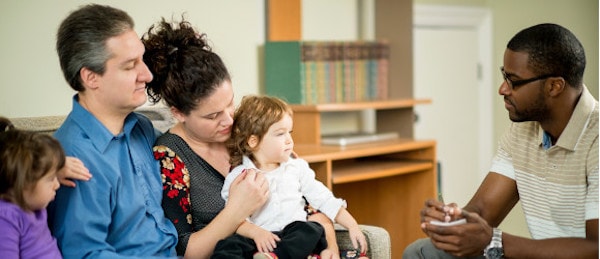 Equally the dissimilar types of therapy described higher up show, a family therapist may exist called upon to take on many different roles.
These many roles require a family unit therapist to undergo a great deal of training, formal education, and testing to ensure that the therapist is upwardly to the chore.
"In this therapy, the therapist takes responsibility for the result of the therapy. This has zip to do with good or bad, guilt or innocence, right or wrong. It is the uncomplicated acknowledgement that you lot make a difference."
Eileen Bobrow
While therapists may accept dissimilar methods and preferred treatment techniques, they must all accept at to the lowest degree a minimum level of experience with the handling of:
- Child and adolescent behavioral problems;
- Grieving;
- Low and anxiety;
- LGBTQ issues;
- Domestic violence;
- Infertility;
- Marital conflicts;
- Substance abuse (All Psychology Schools, 2017).
In order to care for these and other family unit issues, therapists must:
- Observe how people interact within units;
- Evaluate and resolve relationship bug;
- Diagnose and care for psychological disorders within a family context;
- Guide clients through transitional crises such as divorce or death;
- Highlight problematic relational or behavioral patterns;
- Assist supervene upon dysfunctional behaviors with healthy alternatives;
- Have a holistic (listen-body) approach to wellness (All Psychology Schools, 2017).
In club to gain the skills necessary to perform these functions, a family therapist normally obtains a bachelor'due south degree in counseling, psychology, sociology, or social work, followed by a master'southward degree in counseling or marriage and family therapy.
Side by side, the therapist will nearly likely need to complete two years of supervised work subsequently graduation, for a total of 2,000 to four,000 hours of clinical experience. When these requirements are met, the therapist will also likely demand to pass a state-sanctioned exam, every bit well equally complete annual continuing education courses.
This pedagogy trains therapists for guidance with a wide range of problems, including:
- Personal conflicts within couples or families;
- Unexpected affliction, expiry, or unemployment;
- Developing or maintaining a healthy romantic relationship at any stage;
- Behavioral issues in children;
- Divorce or separation;
- Substance abuse or addiction;
- Mental health problems similar depression and anxiety.
This wide range of bug makes it articulate that the answer to "What is a family therapist NOT trained to exercise?" may be shorter than the question of what they ARE trained to practise!
To acquire more than about how marriage and family therapists are trained and how they practice their craft, the following websites are great resources:
- The American Clan for Wedlock and Family Therapy website;
- The All Psychology Schools website;
- The Careers in Psychology website;
- The Marriage and Family Therapist Licensure website;
- The Learn website.
What is the Goal of Family Therapy?

"To put the earth right in order, we must first put the nation in guild; to put the nation in order, nosotros must commencement put the family in society; to put the family in order, we must first cultivate our personal life; nosotros must first set our hearts right."
Confucius
In a nutshell, the goal of family therapy is to piece of work together to heal any mental, emotional, or psychological problems tearing your family apart (Lee, 2010).
To guide a family towards a good for you life, family therapists aim to aid people in improving communication, solving family problems, understanding and handling family situations, and creating a better functioning abode environment (Family Therapy, 2017A).
The goals of family therapy depend on the presenting problems of the clients. For example, goals may differ based on the following scenarios:
- A family member is suffering from schizophrenia or severe psychosis: The goal is to help other family members understand the disorder and adjust to the psychological changes that the patient may be undergoing;
- Problems arising from cantankerous-generational boundaries, such as when parents share a home with grandparents, or children are being raised by grandparents: The goal is to amend advice and help the family members set healthy boundaries;
- Families deviating from social norms (unmarried parents, gay couples raising children, etc.): The goals here are not e'er to address any specific internal problems, but the family members may need help coping with external factors like societal attitudes;
- Family members who come from mixed racial, cultural, or religious backgrounds: The goal is to aid family members further their understanding of ane some other and develop salubrious relationships;
- One member is being scapegoated or having their treatment in private therapy undermined: When one family member is struggling with feeling like the outcast or receives limited support from other family members, the goal is to facilitate increased empathy and agreement for the individual within their family and provide support for them to proceed their treatment;
- The patient'south problems seem inextricably tied to problems with other family members: In cases where the problem or problems are deeply rooted in problems with other family members, the goal is to accost each of the contributing issues and solve or mitigate the effects of this blueprint of problems;
- A blended family (i.e., footstep-family): Blended families can suffer from issues unique to their situations. In composite families, the goal of family therapy is to raise understanding and facilitate salubrious interactions betwixt family members (Family Therapy, 2017B).
Family unit Psychotherapy: Taking information technology One Step Farther
Nosotros tend to remember of therapy and psychotherapy as two different forms of handling, but in fact, they are the same thing. This ambiguity is enhanced when we introduce the term "counseling" too.
In truth, therapy is simply a shortened form of the word "psychotherapy". All the same, counseling is sometimes chosen "talk therapy," blurring the lines fifty-fifty further (Eder, "What is the Difference").
More often than not, counseling is applied in situations where an individual (or, in the case of family unit counseling, a family) engages the services of a counselor or other mental wellness professional to assist with a specific trouble or set of problems.
Therapy, or psychotherapy, is a more than in-depth and usually long-term course of treatment in which the client or clients talk over a wider range of problems and chronic patterns of problematic feelings, thoughts, and behaviors (Eder, "What is the Difference").
A family unit who is struggling with a state of affairs that brings added stress, such every bit the expiry of a family fellow member, habit, or dire fiscal straits, may benefit from counseling to help them through their struggles to emerge on the other side as a stronger and more than cohesive unit.
If a family is struggling with more chronic mental or behavioral problems, such as a male parent dealing with schizophrenia, a mother fighting low, or a child who has been abused, psychotherapy is likely the better choice.
This blazon of therapy is appropriate for families with problems such equally these because a family therapist has a different perspective on handling than an individual therapist. While the private therapist works with one customer on solving or curing a problem, the family therapist views problems in the context of the "system" of the family. To solve a trouble in a system, yous need to consider all parts of the system.
Fixing the alternator in a auto will not fix the problem if it likewise has flat tires, a faulty transmission, and a plugged exhaust pipe.
Issues within a family are similar to the car with several problems. A parent struggling with alcoholism is not a problem in isolation; the parent'southward struggle has probable affected their spouse and their children as well. A family therapist believes that problems must be addressed at the level of the whole family rather than on an individual level (Schwartz, 2009).
What are the Benefits of Family unit Therapy?
This more holistic approach to treating problems inside a family unit has proven to be extremely effective in many cases. In family therapy, families tin can work on their bug with the guidance of a mental wellness professional in a safe and controlled environment.
The benefits of family therapy include:
- A better understanding of salubrious boundaries and family patterns and dynamics;
- Enhanced communication;
- Improved problem solving;
- Deeper empathy;
- Reduced conflict and improve anger direction skills (10 Acre Ranch, 2017).
More specifically, family therapy can better family relationships through:
- Bringing the family unit together after a crisis;
- Creating honesty between family members;
- Instilling trust in family members;
- Developing a supportive family environment;
- Reducing sources of tension and stress within the family;
- Helping family unit members forgive each other;
- Conflict resolution for family members;
- Bringing dorsum family unit members who have been isolated (American Addiction Centers, 2017).
Family unit therapy enhances the skills required for healthy family functioning, including advice, conflict resolution, and trouble-solving. Improving these skills as well increases the potential for success in overcoming and addressing family problems.
In family therapy, the focus is on providing all family unit members with the tools they need to facilitate healing (Teen Handling Eye, 2014).
half-dozen Examples and Exercises
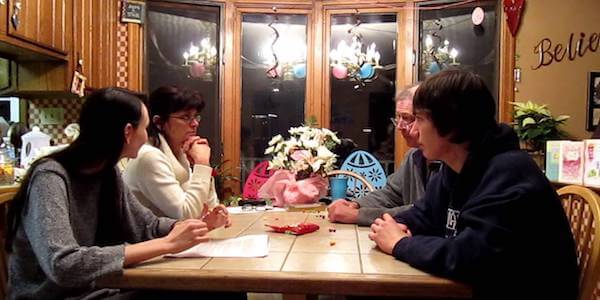 If family therapy sounds similar a handling that would benefit you lot and your loved ones, the best grade of action is to observe a licensed professional with whom you can build a practiced working relationship and address the problems your family is facing.
However, if you lot're not quite ready for this step, or there are obstacles betwixt y'all and getting treatment, there are many exercises and suggestions that you may detect to be good alternatives.
The exercises and techniques beneath are meant to exist used within the context of a therapeutic working relationship, simply some also have applications for those who wish to explore the possibilities of family therapy before committing to long-term treatment with a therapist. If you are a therapist or other mental health professional, yous may find these exercises to be useful additions to your therapy toolbox.
The Miracle Question
This exercise tin can be used in individual, couples, or family therapy, and is intended to aid the client(s) explore the type of hereafter they would similar to build. Nosotros all struggle at times, but sometimes the struggle is greater because nosotros simply do not know what our goals really are.
The Miracle Question is an excellent way to assist the customer or clients probe their own dreams and desires. When used in the context of couples or family therapy, it can assist clients in understanding what their significant other or family fellow member needs in order to be happy with their human relationship.
This Miracle Question is posed as follows:
"Suppose tonight, while y'all slept, a miracle occurred. When yous awake tomorrow, what would exist some of the things yous would notice that would tell you life had of a sudden gotten meliorate?"
(Howes, 2010)
While the client may give an answer that is an impossibility in their waking life, their answer tin notwithstanding be useful. If they do requite an impossible answer, the therapist can swoop deeper into the clients' preferred phenomenon with this question: "How would that brand a difference?"
This question aids both the customer and the therapist—the client in envisioning a positive future in which their problems are addressed or mitigated, and the therapist in learning how they tin best aid their client in their sessions.
You lot tin can learn more than about this exercise using the Miracle Worksheet.
Colored Candy Go Effectually
If you're looking for a fun and artistic icebreaker or introduction to family unit therapy, this do tin can be a neat mode to kickoff.
To appoint in this exercise with your family unit, you need a parcel of Skittles, M&Ms, or a similar colorful processed. Distribute seven pieces to each family unit fellow member, and instruct them to sort their candy by color (and refraining from eating information technology just yet!).
Next, ask a family member to choice a color and share how many they have. For however many candies of this color they accept, instruct them to give the aforementioned number of responses to the post-obit prompts based on the color:
- Green – words to describe your family;
- Regal – ways your family has fun;
- Orange – things you lot would similar to improve about your family unit;
- Red – things you lot worry about;
- Yellowish – favorite memories with your family.
Family Therapy Exercises. Image Courtesy of Wikimedia.
When the first family fellow member has given their answers, tell them to choose the adjacent family member to answer the same prompt based on the number of candies that person has.
Once the prompt has been answered, the candies can exist eaten.
When all family members have responded to these prompts, initiate a discussion based on the answers provided past the family. The following questions can facilitate discussion:
- What did you learn?
- What was the most surprising thing y'all learned nigh someone else?
- How will y'all work towards making changes/improvements?
Given the high sugar content in this exercise, you lot can see that this is a great game to play with young children! If this sounds like a useful exercise that you lot would like to effort with your family, you can find further data and instructions on page 3 of this PDF from therapist Liana Lowenstein.
Emotions Ball
This is a simple do, requiring only a ball and a pen or marker to write with. It is frequently used with children and teenagers in many contexts, as it takes the force per unit area off of talking about emotions for those who may be uncomfortable sharing their feelings.
A beach ball is a perfect ball for this activity—large enough to write several emotions on and like shooting fish in a barrel to throw back and forth in a circle. Write several emotions on the ball, such as "joyful," "alone," "giddy," or "distressing."
Gather your family into a circle and begin to toss the ball back and forth between family members. When a family unit member catches the brawl, take them describe a fourth dimension when they felt the emotion facing them. Alternatively, you lot could have the catcher act out an emotion, an activeness especially suited for children.
The intent of this practice is to talk over emotions with your family and practise listening to one another and expressing your feelings.
You tin read more about this exercise hither.
The Family Gift
This exercise tin assist a therapist to get to know a family unit amend. If you are using it without the guidance of a therapist, information technology can assist yous to further your agreement of your ain family and provoke thoughtful discussion.
To give this practise a try, assemble a variety of art supplies and a gift bag. Explain to the family unit that they are going to create a souvenir from the materials provided. This gift volition be a gift for the whole family, that everyone in the family wants. They must decide together on this gift and how it can exist used inside their family.
They have 30 minutes to make up one's mind on this gift and craft it. In one case they take created the gift, they must identify it in the souvenir bag. Within the context of family unit therapy, this exercise provides the therapist with a await at the inner workings of the family, how they brand decisions and complete tasks every bit a unit.
If you are engaging in this exercise every bit a family without the presence of a therapist, information technology can assistance yous to get-go a meaningful chat.
Use these questions or prompts to facilitate the discussion:
- Draw your souvenir.
- Tell how you each felt as yous were creating your gift.
- Who made the decisions? For example, who decided what the gift should be?
- Were two or more people in your family able to piece of work well together?
- Did anyone cause any difficulties or disagreements, and if so, how was this handled?
- Is there annihilation most the way you did the activeness that reminds you lot of how things work in your family at home?
- How tin the gift aid your family? What else tin assistance your family unit?
There is a wealth of data to be gained from observing these types of interactions or engaging in these kinds of give-and-take.
To read more about this exercise, see pages 3 and iv of the PDF mentioned earlier.
Mirroring Activity
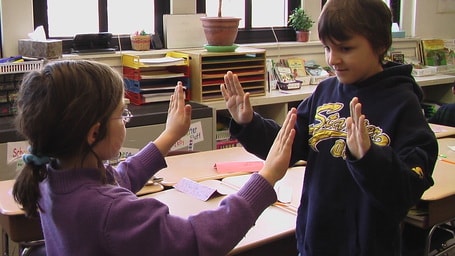 This fun exercise is a slap-up way to help family unit members relate to each other and work together.
The activeness can exist explained to a family by the therapist with the following instructions:
"I want y'all to stand up in front of me merely correct there (pointing to a spot about 2 feet in front of the practitioner). You are going to be my mirror. Everything I do you will try to copy, but the trick is to copy me at exactly the same time that I am doing it, and so that you are my mirror. I volition get slowly so you have a adventure to think most where I will be moving and then that we can do it exactly at the same fourth dimension. We tin can't touch on each other. I volition lead first so you volition take a plow leading. Set? Here we become!"
Starting time, the therapist tin can model this practise with one of the family members, then that person tin have a turn leading another.
This is an especially useful practice for children, but it can exist used with family unit members of whatever historic period. It requires the family unit members to give each other their full attending, cooperate with ane another, and communicate with both words and trunk language.
It too allows the family members to get more in melody with i another and tin can be applied with siblings, a parent, a child, or even couples in marriage counseling.
To come across the instructions and read more about this exercise, meet page 20 of this booklet, likewise from Liana Lowenstein.
Genogram
A genogram is a schematic or graphic representation of a customer's family tree. Withal, unlike the typical family unit tree, the genogram provides far more information on the relationships among members of the family.
It tin can be used to map out blood relations, medical conditions in the family, and, nearly often in the example of family unit therapy, emotional relationships.
Genograms contain two levels of data—that which is present on the traditional family tree and that which provides a much more than comprehensive look at the family:
- Basic Information: proper noun, gender, date of nativity, engagement of expiry (if whatever);
- Additional Information: education, occupation, major life events, chronic illnesses, social behaviors, nature of family relationships, emotional relationships, social relationships, alcoholism, depression, diseases, alliances, and living situations (GenoPro, 2017).
By including this boosted data, the therapist and client(s) can work together to place patterns in the family unit history that may take influenced the client'south electric current emotions and behaviors. Sometimes the simple act of mapping out and observing this information can make clear things that were previously unnoticed.
The information on emotional relationships can include points of involvement and whatever aspects of the relationship that may have impacted the customer(s), such as whether the relationship is marked by abuse, whether a union is separated or intact, if a relationship is characterized by beloved or indifference, whether a relationship could exist considered "normal" or dysfunctional, etc.
This practice could be completed individually, but information technology is likely to exist most effective when completed in conjunction with a qualified professional person.
You tin learn how to use them in family therapy here.
Recommended Books
1. The Seven Principles For Making Marriage Work: A practical guide from the international bestselling relationship expert – John Gottman
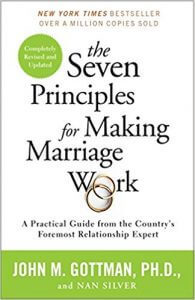
This is an first-class read for whatsoever not-professionals who wish to learn more about what family therapy tin can do for couples.
Although this is intended for married couples, any individual in a long-term relationship can do good from this resource of applied wisdom.
Notice the book on Amazon.
2. Why Marriages Succeed or Fail – John Gottman
Another entry from Dr. Gottman, this book provides an in-depth look at the inner workings of matrimony and gives advice on how to ensure that your spousal relationship is ane of the successful ones.
Notice the book on Amazon.
3. Family Therapy: Concepts and Methods – Michael Nichols and Sean Davis
Those with only a casual interest in family therapy may not find much of interest in this book, but anyone who wishes to gain a deeper understanding of the theory and practice of family unit therapy will find this book invaluable.
Information technology gives the reader a solid foundation in the techniques, methods, and bookish foundations of family therapy.
If you lot are interested in becoming a family therapist, or simply learning more about the practice of therapy within the context of the family, this book is a perfect place to start.
Discover the book on Amazon.
4. Essential Skills in Family Therapy: From the First Interview to Termination – JoEllen Patterson, Lee Williams, Todd M. Edwards, Larry Chamow, Claudi Grauf-Grounds, and Douglas H. Sprenkle

This book is a fantastic resources for those with little or no experience in family therapy.
The linguistic communication is simple and accessible, and each chapter provides a guide for students and newly minted therapists who wish to set up for their first sessions.
Topics include intake and assessment, treatment planning, building and maintaining the therapeutic relationship, and trouble-solving when handling is non progressing.
Find the volume on Amazon.
5. The Family Therapy Treatment Planner – Frank M. Dattilio, Arthur East. Jongsma Jr., and Sean D. Davis
This is another helpful resource for new therapists.
The Family Therapy Handling Planner will aid the therapist in planning handling for clients, dealing with wellness insurance companies and health providers, and navigating the circuitous ocean of rules and regulations.
In addition, this book includes many treatment programme options, a sample treatment plan, and guidelines on dealing with the near common presenting problems for family therapists.
Find the book on Amazon.
A Take-Home Message
Family therapy is a way for you and your family to learn how to maintain healthy family relationships, communicate effectively with family members, and work cooperatively to solve family unit issues. This type of therapy is unique, in that bug are viewed through a broader lens and as part of the complex system of the family.
This perspective allows family therapists to help families get to the root of their bug and facilitates healing for all members of the family unit, whether the trouble is related to substance abuse or addiction, abuse, mental health disorders, unexpected or dire circumstances, or just the ordinary everyday stress we all struggle with on occasion.
This piece described the benefits and goals of family therapy, introduced 4 of the most common types of therapy, contrasted family counseling with family psychotherapy, and provided examples of the exercises and techniques used in family therapy.
My hope is that you discover this information useful whether y'all are interested in engaging with a family therapist, condign a family therapist, or just learning more almost family therapy.
If you have ever participated in family therapy or if you have practiced family therapy in your work as a mental health professional, we'd dearest to hear about your experiences in the comments. Did y'all discover engaging in family therapy helpful?
Did y'all get to reap the benefits described here? If yous accept practiced family unit therapy, what are some of the most valuable things you have learned from your practice?
Give thanks y'all for reading!
Nosotros hope you enjoyed reading this article. Don't forget to download our 3 Positive Relationships Exercises for free.
- 10 Acre Ranch. (2017, January 23). 10 Acre Ranch. Retrieved from https://www.10acreranch.org/weblog/2017/01/23/5-benefits-family-therapy/
- American Addiction Centers. (2017). The benefits of family therapy. Forterus. Retrieved from http://forterustreatment.com/therapy/family-therapy/
- http://www.drpatrick.com/
- Eder, A. What is the departure betwixt counseling & psychotherapy? Ashley EderCounseling & Psychotherapy. Retrieved from http://world wide web.ashleyeder.com/counseling-psychotherapy/
- "Family Therapy". (2014, January 14). Good Therapy. Retrieved from http://world wide web.goodtherapy.org/learn-about-therapy/modes/family-therapy
- Family therapy. (2017A). In Encyclopedia of Children's Health. Retrieved from http://libguides.dixie.edu/c.php?g=57887&p=371718
- Family therapy. (2017B). In Encyclopedia of Mental Disorders. Retrieved from http://world wide web.minddisorders.com/Del-Fi/Family-therapy.html
- GenoPro. (2017). Introduction to the genogram. GenoPro. Retrieved from https://world wide web.genopro.com/genogram/
- Herkov, M. (2016). Virtually family therapy. Psych Central. Retrieved from https://psychcentral.com/lib/most-family unit-therapy/
- Howes, R. (2010, January 17). The ten coolest therapy interventions: Introduction. Psychology Today. Retrieved from https://www.psychologytoday.com/blog/in-therapy/201001/the-x-coolest-therapy-interventions-introduction
- Schwartz, A. (2009, March 31). Family unit therapy: A unlike approach to psychotherapy. Mental Help. Retrieved from https://www.mentalhelp.internet/blogs/family unit-therapy-a-different-arroyo-to-psychotherapy/
- Teen Treatment Heart. (2014, March 20). The benefits of family unit therapy. Teen Handling Center. Retrieved from https://www.teentreatmentcenter.com/blog/the-benefits-of-family unit-therapy/
Source: https://positivepsychology.com/family-therapy/
0 Response to "Beyond Technique in Family Therapy Finding Your Therapeutic Voice Pdf"
Publicar un comentario